Recovering a Master Artist’s Story
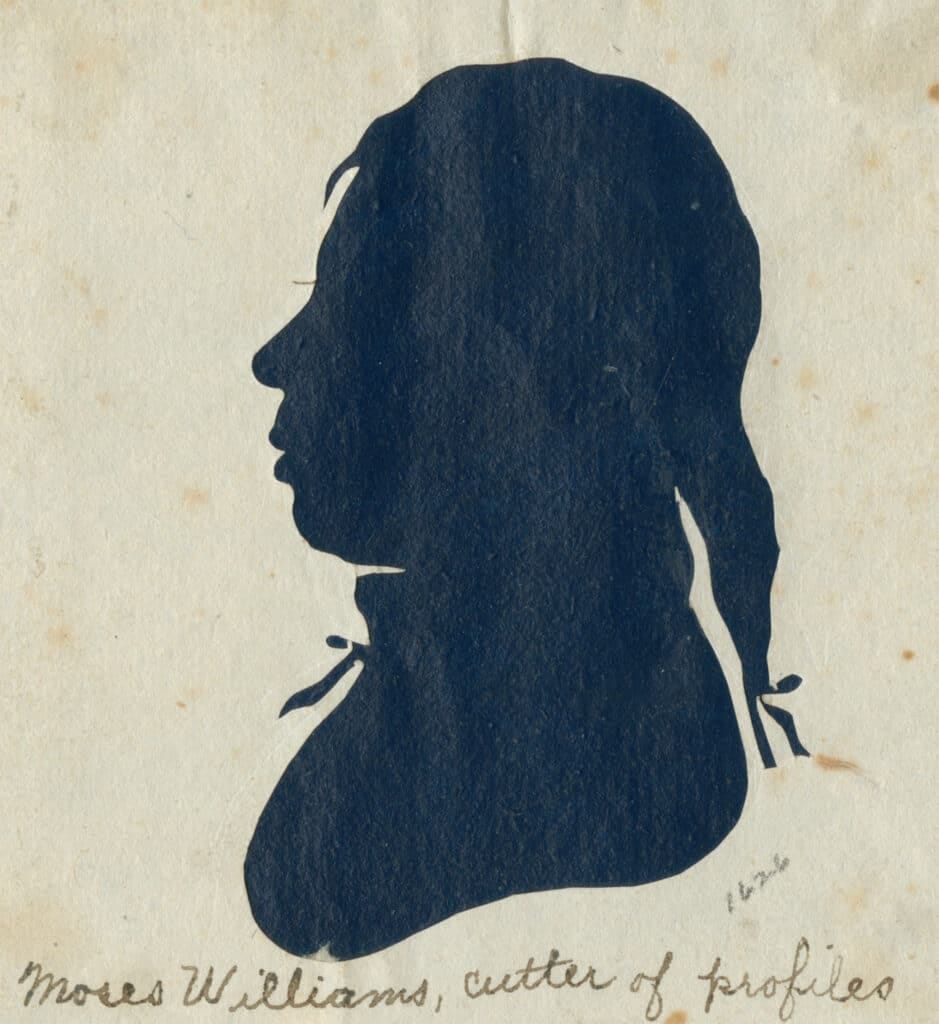
Moses Williams: Cutter of Profiles brings long-overdue attention to one of the most prolific and overlooked artists of early America. Born around 1776, Moses Williams was an extraordinary silhouette artist whose finely cut “profiles” captured the likenesses of hundreds of people at a time when photography did not yet exist. In an era when portraiture often signaled status and permanence, Williams’s work offered something both intimate and radical: a quick, affordable likeness that made self-representation accessible to a wider public—while also revealing the presence of a Black artist working at the heart of the early American museum world.
Williams was born enslaved to artist and museum founder Charles Willson Peale and grew up working in Peale’s Philadelphia museum. Like many enslaved people, he was compelled to labor in service of others—yet within that environment he developed an extraordinary skill and a distinct professional identity. Over time, Williams became known for his precision, speed, and sensitivity to character. He eventually earned money for his work and, in doing so, became one of the earliest documented African American artists to achieve professional success in the United States. His story complicates familiar narratives of early American art by placing a Black maker—not simply a subject or an unnamed worker—at the center of cultural production.
Silhouettes may appear modest at first glance, but they sit at the intersection of craft, technology, and social life. They required mastery of tools, close observation, and the ability to translate a living face into a clean, legible outline—often in minutes. Williams’s “profiles” are not only portraits; they are records of encounter. They preserve moments of presence for people who might otherwise be absent from the historical record, and they raise questions that still resonate today: Who gets remembered? Who is credited? What kinds of labor are visible—and what kinds are concealed?
This exhibition traces Williams’s work within the context of the Peale family’s museums and the early republic, while also confronting the conditions under which his talent emerged. It invites visitors to consider how museums themselves were shaped by systems of coerced labor, and how the artistry of enslaved and marginalized people helped build the cultural institutions that would later claim to represent the nation. At the same time, it highlights Williams’s agency—his professional ingenuity, his ability to earn income, and the remarkable legacy of an artist who insisted, through his work, on the value of individual lives.
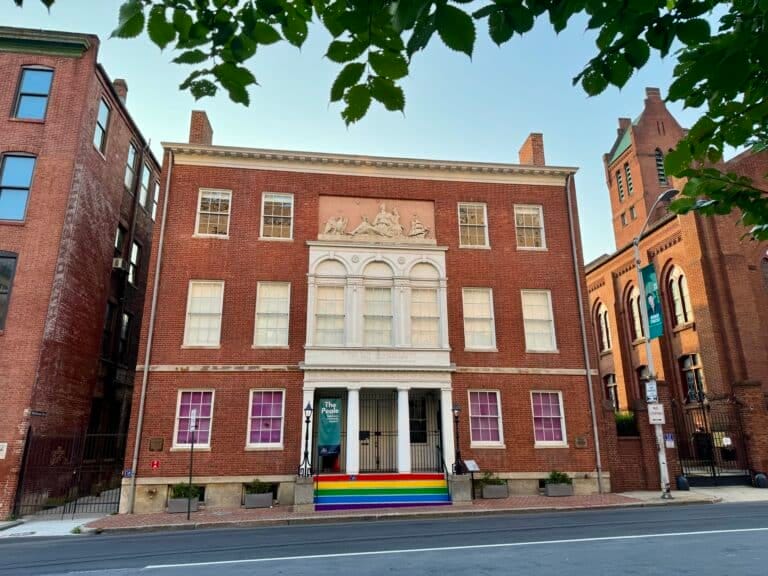
His story now comes full circle at The Peale in Baltimore, the museum founded by Rembrandt Peale, where his life and legacy are being re-examined and shared with new audiences. As Baltimore’s Community Museum, The Peale is committed to telling history as something living—shaped by ongoing research, public dialogue, and the communities who engage it. Williams’s work offers a powerful anchor for that approach: it is historically specific and deeply contemporary, connecting early American cultural life to enduring questions about race, authorship, visibility, and belonging.
Developed in partnership with Quatrefoil Associates, this exhibition marks the first iteration of a permanent, evolving installation dedicated to Moses Williams. Ongoing research continues to shape and expand the exhibition, reflecting The Peale’s commitment to scholarship that grows over time—and to interpretation that remains responsive rather than fixed. Visitors may encounter new findings, rotating materials, and emerging questions as this installation develops.
Through silhouettes, interpretive materials, and experimental display techniques, Moses Williams: Cutter of Profiles invites visitors to look closely—at the artistry of the cut, at the social world these portraits reveal, and at the historical forces that nearly obscured Williams’s name. Above all, it restores visibility to an artist whose contributions were nearly lost to history, and it reframes the early American museum not as a static monument, but as a contested space where stories can be recovered, reinterpreted, and made newly present.